As climate risks continue to intensify, early action is key to protecting community health. Community-based approaches are opening up more sustainable solutions – especially for children and vulnerable groups.
Climate change is intensifying health risks in urban areas - from extreme heat and air pollution to the spread of infectious diseases. These impacts are not evenly distributed, disproportionately affecting vulnerable groups such as children, women, migrant workers, and people with disabilities.
In response, Save the Children and its partners are promoting locally-led climate adaptation approaches to help communities take a more proactive role in protecting health and reducing the impacts of climate change.
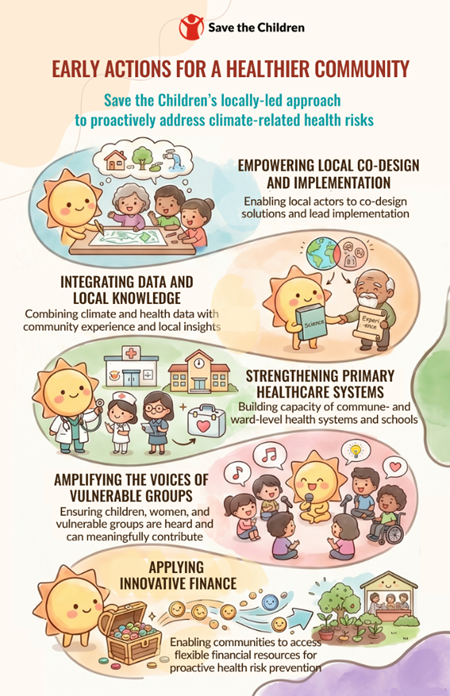
 This approach places communities at the center, combining technical solutions with sustainable support mechanisms, including:
Empowering local actors to co-design and lead implementation;
Integrating climate and health data with local knowledge and community experience;
Strengthening the capacity of primary healthcare systems;
Ensuring that the voices of children, adolescents, and vulnerable groups are heard;
Piloting innovative financing mechanisms to enable communities to access more flexible resources for proactive risk prevention and health protection.
When communities are supported with the necessary resources in terms of knowledge, systems, and financing, a safer and healthier environment can gradually take shape, where children can grow, thrive, and confidently look toward the future.