
How can communities improve their livelihoods while also protecting the ecosystems they depend on?
Ecosystem-based Enterprises (EBEs) offer one promising answer to the above question. EBEs are livelihood models built on the sustainable use of natural resources. Instead of simply extracting from nature, these models help communities generate income while contributing to the protection, restoration, and sustainable management of ecosystems.
Examples of EBEs include mangrove-based aquaculture, environmentally friendly agriculture, small-scale natural harvesting, and eco-tourism. These models are especially important for communities living in areas vulnerable to climate change, as healthy ecosystems can support both long-term livelihoods and stronger climate resilience.
In Vietnam, the project “Innovative Finance for Ecosystem-based Enterprise Development”, implemented by Save the Children and partners, is supporting the development of EBEs in selected locations. The project aims to explore and promote financial and development solutions that are practical, inclusive, and aligned with local contexts.
Through the photos below, explore how ecosystem-based livelihoods are taking shape in Song Dam and Dat Mui, and how communities are working towards a future where people and nature can thrive together.
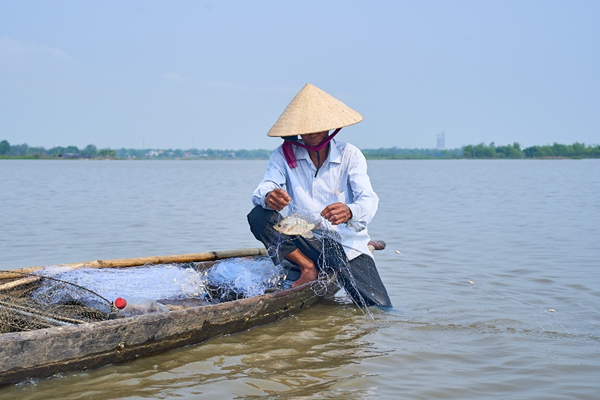
Photo: In Song Dam, Da Nang, local livelihoods are closely connected to the lagoon ecosystem, including aquaculture, small-scale natural harvesting, and eco-based services.
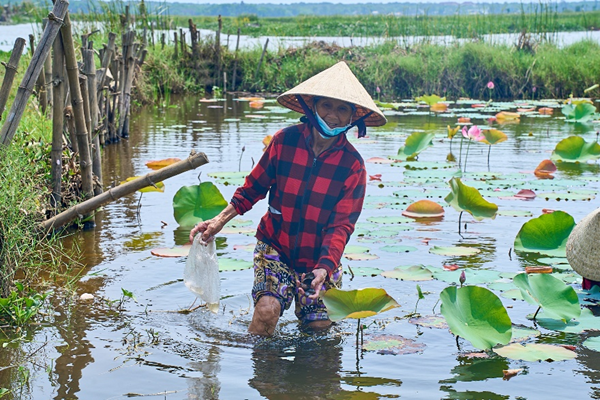
Photo: Protecting the lagoon means protecting the long-term income and wellbeing of the communities who rely on it.
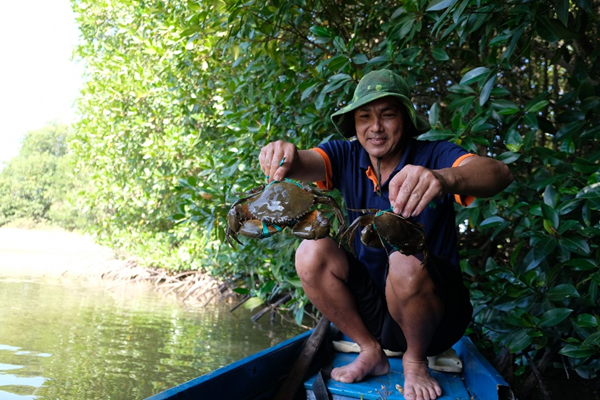
Photo: In Dat Mui, Ca Mau, integrated shrimp–mangrove farming is emerging as a sustainable livelihood model, enabling communities to earn an income while protecting and restoring mangrove forests.
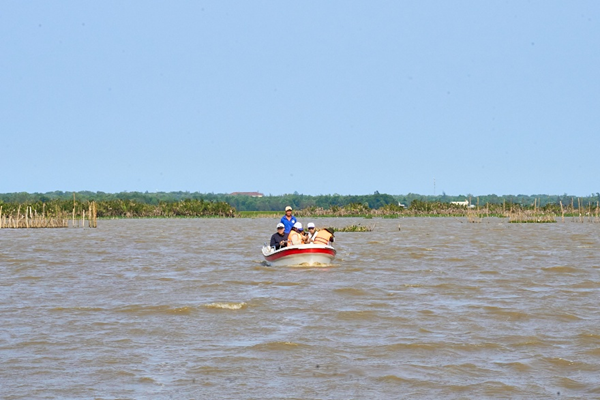
Photo: Eco-tourism also presents promising opportunities for local communities to benefit from the unique natural landscape of the areas.