
Behind every coffee bean is a journey that connects land, livelihoods, businesses, and communities. Yet within that journey, there are also questions that go beyond quality standards or market requirements: How can children in coffee-growing areas be better protected? How can sustainability become more than compliance, and create real change for families and communities?
In the below story, Nathan Y, who works on sustainability initiatives within a coffee company in Dak Lak, shares how his understanding of a sustainable value chain has shifted - from meeting standards to placing children’s safety, wellbeing, and development at the center of long-term change.
My name is Nathan Y, and I currently work on sustainability initiatives within a coffee supply chain at a company based in Đắk Lắk.
I used to think that a sustainable coffee value chain simply needed to meet standards. But then I realized there are many other important issues, such as ensuring that children in these communities, especially those in growing areas, can develop in a safe environment. If we only do things for the sake of compliance, we will not create real change.
Over the past six months, I decided to take a different approach. I went directly to the sourcing areas, reconnecting the entire chain from businesses and agents to farmers. We joined training sessions together, shared lessons learned, reflected on what is actually happening, and worked together to build solutions that fit the local context.
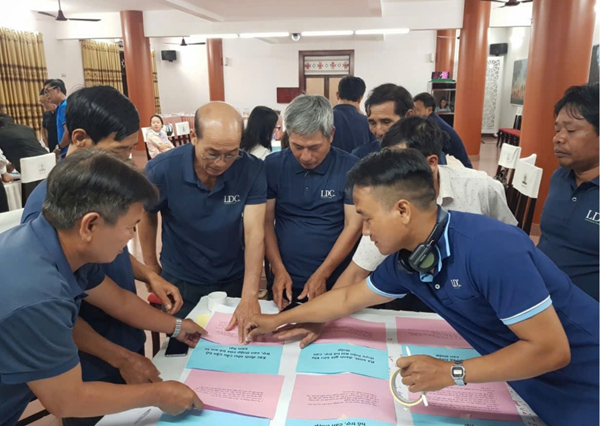
Photo: Nathan Y in a group discussion with his colleagues.
These efforts aim to:
Help stakeholders in the supply chain identify risks related to children at an early stage
Gradually build response and support mechanisms when needed
And more importantly, create a safer environment where children can learn and grow
We have been accompanied by Save the Children. Through the project, we have gained deeper understanding, worked in a more structured way, and learned how to connect with local systems and resources so that these solutions can be sustained over time.
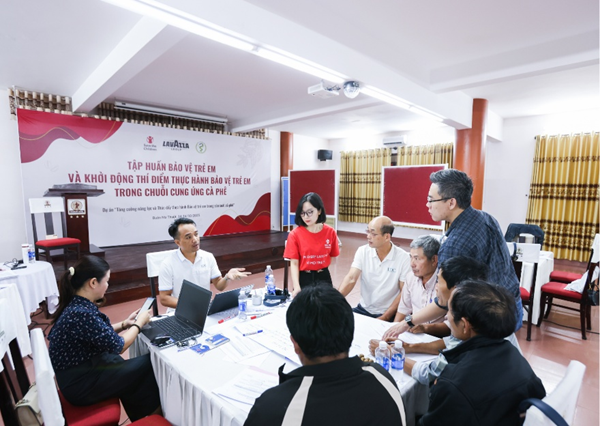
Photo: Nathan Y participating in a training on child protection in coffee supply chain by Save the Children.
What I have realized most clearly is that no single company can do this alone. Only when everyone is involved can change truly be sustainable.
To me, when children grow up in a safer environment, the value of the entire supply chain becomes stronger as well.


