Hear how communities in Southern Sri Lanka are standing strong against disasters
In Sri Lanka, climate-related disasters are no longer rare events. Since 2010, nearly 13 million people have been affected by floods, landslides, and droughts, with children often the most vulnerable. In the southern district of Matara, families like Shamila’s* have felt the devastating impact first-hand.
She remembers the devastating 2017 floods when her family had to be rescued on a makeshift raft. She recalled being completely unprepared and lost everything, and her daughter Hiruni*, then 11, remembers destroyed schoolbooks and wearing the same uniform for weeks.
Flooding has become more frequent since then, disrupting education, livelihoods, and health. In May 2024, Shamila’s village was once again submerged. She says:
“Back then, floods came every 15 or 20 years. Now, it feels like every few months,”
With support from Save the Children and Sahana Social Development Alliance (SSDA) support, they formed a Village Disaster Management Committee (VDMC), with Shamila* as Secretary. What started as 30 members has grown to more than 200, bringing families, government officers, and young people together to prepare, respond, and recover from disasters.
Crucially, children’s voices are shaping these efforts. Through child consultations, boys and girls spoke openly about their fears, stress, and hopes for better protection. Their perspectives are now considered when planning community initiatives, and also feeds into local government disaster plans, ensuring responses are not only timely, but also safe and inclusive.
“We need adults to listen and value our opinions. Now, we finally feel heard.”
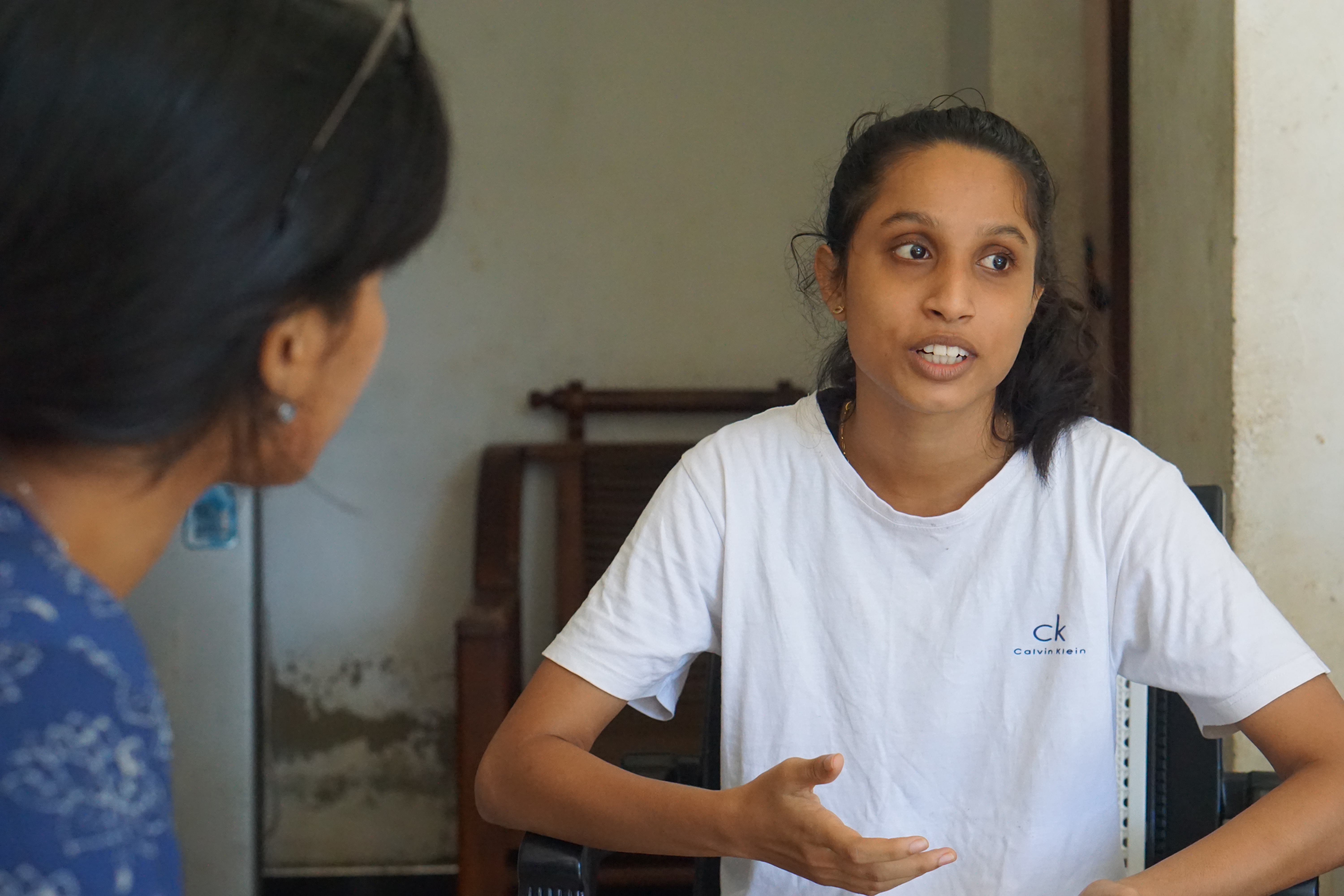
Hiruni*, 18, speaks to Save the Children, in her home in Southern Sri Lanka. Credit: Nashali Silva/Save the Children.
The VDMC has mapped high-risk areas, restored canoes for safe evacuation, installed flood markers, and identified evacuation centres. They also work hand-in-hand with government officers to coordinate early warnings and relief.
These community-led efforts are part of a bigger shift at the national level. With flexible humanitarian funding, Save the Children and partners, including the International Water Management Institute and the University of Ruhuna, co-developed Sri Lanka’s first Locally-Led Anticipatory Action Framework. By combining scientific data with community knowledge, it will help communities across the country act before disasters strike, protecting children, families, and livelihoods.
This transition, from emergency response to long-term resilience, is giving families in disaster-prone communities in Sri Lanka the tools, leadership, and confidence to face the future.
For Shamila*, the impact is already real.
“Our entire village now comes together to prepare for disasters and support each other. The VDMC has become a blessing for us.”
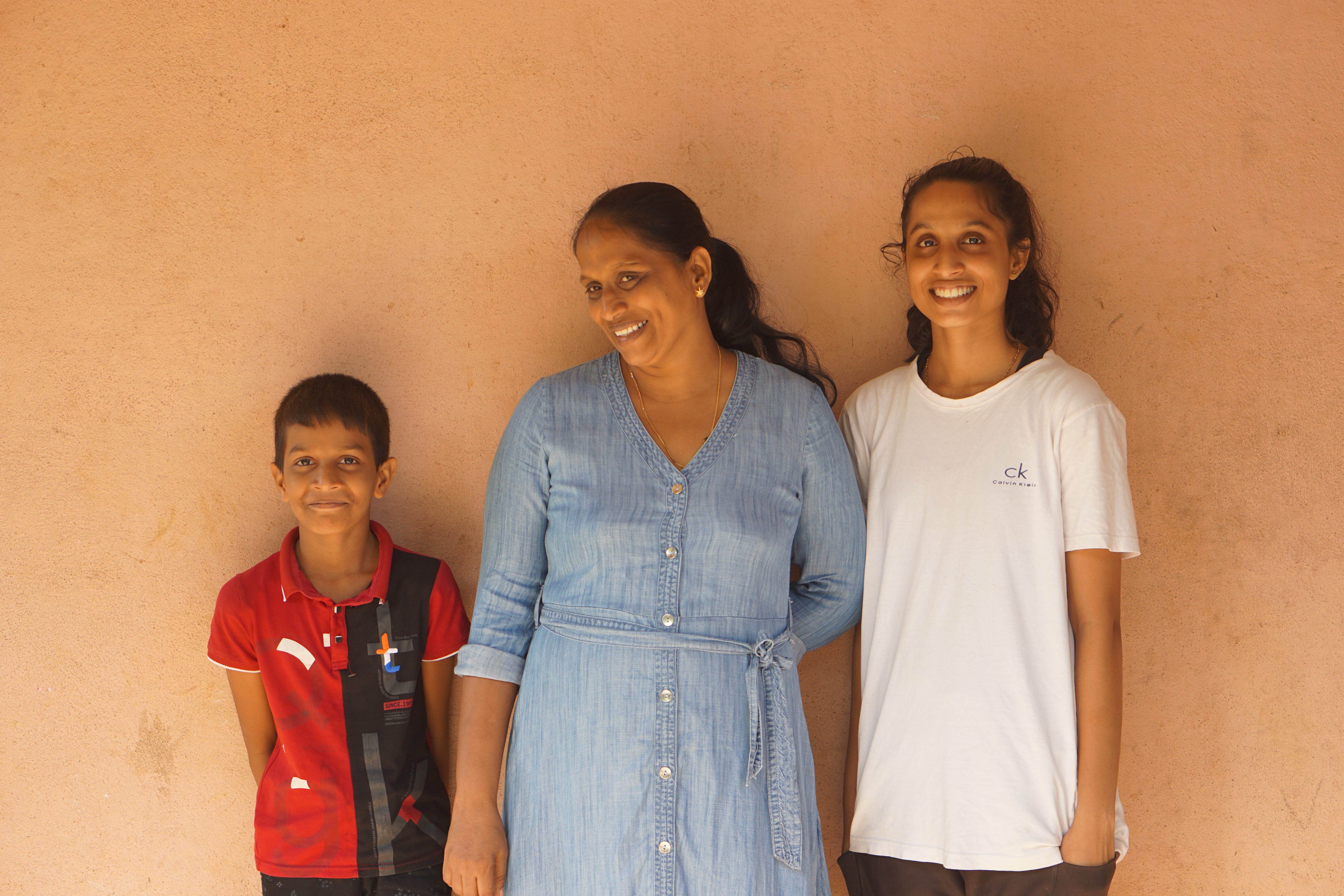
Shamila* with her children, Sineth* and Hiruni*, outside their home in Southern Sri Lanka. Credit: Nashali Silva/Save the Children.
*names changed to protect identities
Written by Sejani Wilegoda