
During a meeting with district officials at the Moroto local government, one official remarked, “Karamoja’s problem is water. Once you solve the water problem in Karamoja, you will have solved Karamoja’s problems.” This statement presents a complex paradox, and anyone who has worked in Karamoja would likely agree with it.
One of the region’s most pressing challenges is the persistent drought, which not only causes food insecurity and malnutrition but also leads to poor hygiene, low school attendance among children, and widespread poverty, among other issues. For Save the Children, this situation poses a significant barrier to achieving our goals of ensuring that children learn, survive, are protected, and thrive.
Thanks to funding from the Japan Ministry of Foreign Affairs through Save the Children Japan, Save the Children has been able to pilot a small-scale irrigation scheme. This initiative highlights the importance of water for agricultural production and its impact on food and nutrition security in Karamoja. The goal of the project is to “improve secure access to nutritious and safe food for agropastoral households in the Karamoja subregion, thereby enhancing the health of children and mothers.”
The Mini irrigation scheme is located at Akariwon village, Tapac Parish, Tapac Sub County, Moroto district. The scheme has two production boreholes with a combined production capacity of 4 cubic metre, and 2 pump stations, one at the sub county headquarter and one near the catholic mission. The scheme serves a 4-acre garden of 32 blocks, each measuring approximately 25X20 metres. Crops grown at the site include Tomatoes, cowpeas, Sukuma wiki, Onions and Egg plants. The project provides nutrition education to the project participants including ensuring a balanced diet and food preparation.
The project has facilitated establishment of an irrigation management committee comprised of 10 members responsible for the day-to-day management and maintenance decisions of the scheme and two pump attendants who support in the maintenance of the scheme.
The scheme directly benefits 40 households constituted into 2 groups of 20 members each. These groups are also engaged in Village savings and Loans Association (VSLA) and beekeeping.
Communities in and around Tapac sub county have benefited from the mini-irrigation scheme. They can access water for domestic use from the site as well as procure vegetables from the group members.
As a result of the project, there is improved access to safe and nutritious vegetables amongst directly supported households and the communities around the irrigation system. One member noted that with the irrigation system, they are now able to produce and consume fresh vegetables all year round, which was not possible before. From November 2024 up to now (March 2025) which also covers the long dry season, the group was able to produce vegetables which was consumed by members. Part of the vegetables produced was also sold to generate income for the group members. Between November 2024 and March 2025, the group made approximately made UGX 1,000,000 from the sale of vegetables per season. They were also able to support household needs and contribute to their VSLA to increase on the loan fund for borrowing by the group members.
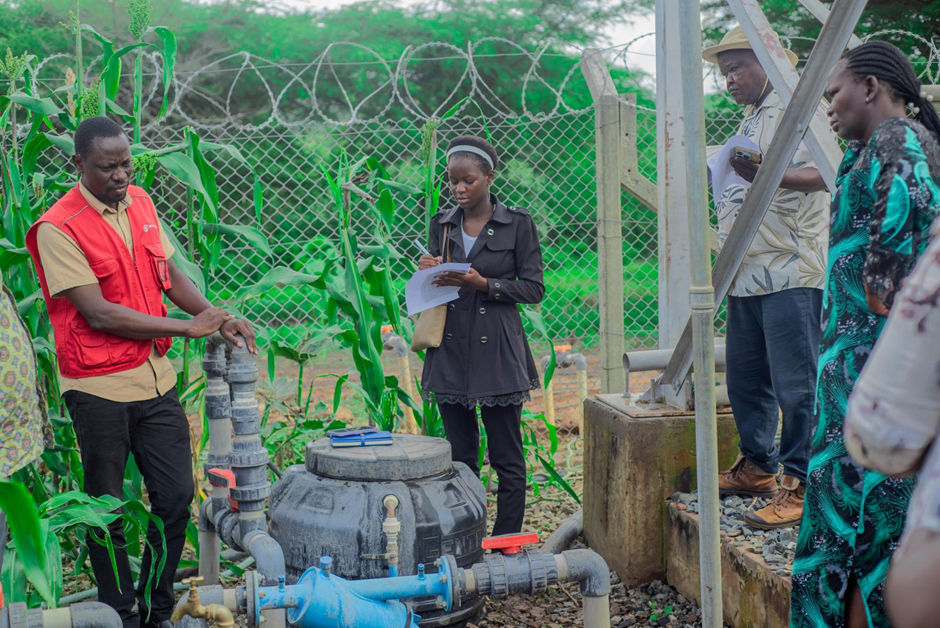
“Water for production is key for any agriculture related project to succeed in Karamoja. The provision of water for production through the Tapac Mini Irrigation system addresses the critical need for water for agricultural production. Through the Tapac mini-irrigation system, the project is contributing to the government of Uganda’s goal of agro industrialization. I believe that the project will also contribute to increased food production and household incomes.’’ Loli Mark, District agricultural officer Moroto.
With the high level of community engagement and ownership and close collaboration with the district and sub country, these benefits will be sustained beyond the project.