Thirteen-year-old Moses, a pupil at Atedeoi Primary School in Moroto District, is one of many children in Karamoja whose lives are being positively transformed thanks to the investment of Save the Children Korea (SCK). Through the Integrated Education Project for Karamoja (IEPK), Giving Ownership to Prevent Stunting (also known as the Karamoja GOATS project), and the Karamoja Hunger Intervention (KHI), Save the Children Korea is helping build a more resilient, educated generation in one of Uganda’s most vulnerable regions.
Despite the hardships of growing up in a resource-constrained environment, Moses remains committed to his dream of becoming a teacher. “I want to focus on my education, support my mother, and help improve our school,” he says with quiet determination.
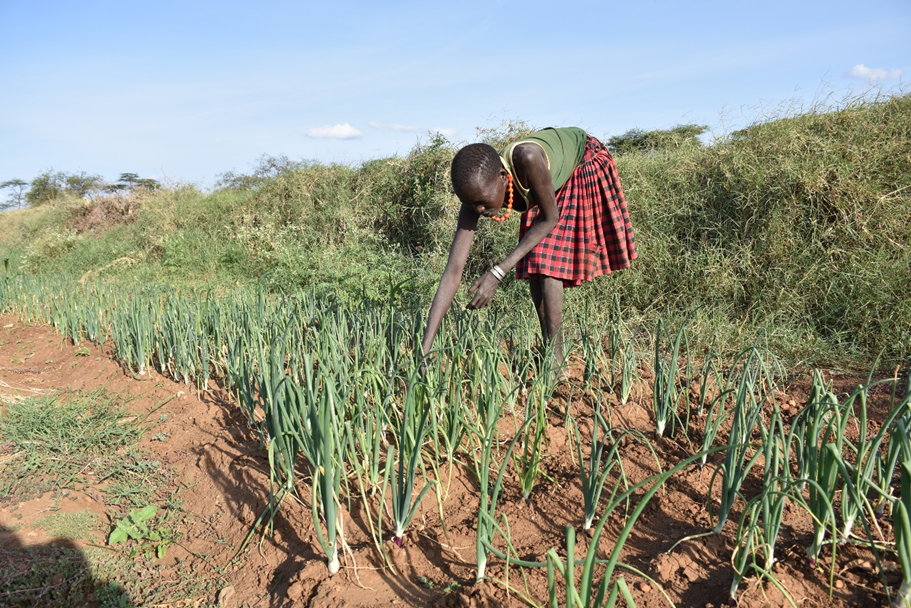
At home, Moses plays an active role helping his mother, Regina, with cooking, fetching water, and teaching his younger siblings the importance of responsibility. His family benefited from seeds distributed under the Karamoja GOATS project, which they used to grow vegetables. Some were consumed at home, while the rest were sold to buy basic necessities like salt and cooking oil. The surplus income even contributed to his mother’s Village Savings and Loan Association (VSLA), showing how a single investment can ripple across an entire household.
His four-year-old brother, Michael*, previously supported under the Karamoja Health Initiative remains healthy and well-nourished—thanks to nutrition training provided to their mother. These gains underscore how multi-sectoral interventions education, nutrition, and livelihoods are creating a web of support that uplifts entire families.
But challenges persist. Moses is unable to join boarding school due to the lack of basic scholastic materials like a uniform, shoes, and a metallic box.
“I want to join boarding school, but I can’t because I don’t have the requirements,” he shares. Water scarcity further complicates learning, as the distant water source serves mainly cooking needs, leaving crops dry and students fatigued.
His mother, Regina, works to support the family through farming, casual labor, and cash-for-work programs under RIAMIRAM, a local community-based organization. She also sells charcoal to make ends meet. Still, she appeals for more support:
“I would love for my goats, stolen during recent raids, to be replaced. They gave us milk and income. I also ask for help with Moses' school items so he can concentrate on his studies.”
Save the Children Korea’s support is planting seeds of hope and resilience in Karamoja. Moses’ story is a powerful example of how sustained investment in education, food security, and livelihoods can help children rise above adversity and dream of a better tomorrow.