With funding support from the Norwegian Organization for Sexual and Gender Diversity (FRI) through Save the Children Norway, Save the Children in Cambodia, in partnership with Cambodia Children and Young People Movement for Child Rights (CCYMCR), is helping underprivileged children and youth in rural areas to unlock their potential and advocate for a safe and supportive space through empowered them with leadership skills to fight for inclusion and equality regarding children's rights.
Meun[1], a 17-year-old youth from Kandal Province, has endured relentless discrimination due to their[2] gender expression, facing bullying, exclusion, and social isolation from an early age. But their life changed when they joined the Club Committee for Child Rights - a child- and youth-led initiative that empowers young people to advocate for their rights and the rights of their peers, where they gained knowledge about sexual orientation and gender identity/expression. In this empowering space, Meun found their voice, connected with a supportive community, and gained the confidence to stand up against discrimination.
Meun was born into a farming family, with both of their parents working as farmers. At the age of 8, Meun began to feel a disconnect between their assigned gender at birth and their gender expression. From a young age, they were drawn to activities traditionally associated with femininity, such as playing with girls, enjoying household chores, and expressing themselves through clothing and gestures considered "girlish" by their community. This early self-awareness set them apart from their peers, resulting in negative labels and exclusion.
Meun’s discrimination worsened when they entered grade secondary school. Their peers would taunt them, imitating their mannerisms, ridiculing their appearance, and calling them derogatory names such as "You gay for a lifetime," “You non-binary,” and “You with feminine behaviour.” Even worse, some teachers contributed to the negative environment by making disparaging comments about Meun's gender expression, labelling them as "too girly" or "so gay," which reinforced harmful stereotypes. The bullying extended into physical harassment, where Meun’s classmates would make fun of their clothing choices and make gestures to imitate their walk.
“My classmates would touch me inappropriately—my butt, waist, and face. I couldn’t understand why they did that to me or why they looked down on me. They laughed as if it was just a joke, but for me, it was humiliating and made me feel powerless," Meun said.
Initially, Meun's family struggled to understand their identity, with some relatives misunderstanding them and their mother believing it was just a phase. Coming from a traditional background, she found it difficult to accept Meun’s gender identity, which led to initial tensions between them. She was fearful for Meun’s safety and concerned about the social stigma they might face, which sometimes manifested in her trying to "correct" their behaviour.
One important moment occurred when Meun shared their experiences at the club and how the supportive community had helped them gain strength. They explained the importance of being true to themselves and the struggles they had faced with bullying and isolation. This openness sparked a change in the mother's perception, even though it was still a process.
Gradually, the mother came to realize that her love and support were crucial to Meun’s well-being, and her fears began to diminish. While it didn’t happen overnight, the mother eventually embraced Meun's gender expression, recognizing it as part of who they truly were.
“My mum encouraged me to stay strong because I hadn’t hurt anyone or done anything negative, so I shouldn’t let it get to me,” Meun said. “At that time, I lacked the courage to participate in school activities, such as children's meetings, school propaganda meetings, and school council meetings. I was afraid that if I joined those activities, people would talk about me or stigmatize me, and I didn’t want to be ridiculed.”
[1] A pseudonym was used to protect the participant’s identity.
[2] Meun's gender pronouns are "they/them/their."
One painful aspect of Meun's experience was the isolation from their village. Many villagers would gossip about them behind their back, further distancing them from the community. When Meun tried to participate in local events or attend communal meetings, they were often excluded or ridiculed. This toxic environment made Meun feel invisible, leading them to withdraw from social activities out of fear of further bullying and humiliation.
In 2021, at the encouragement of their older brother, Meun, at the age of 13, joined the Club Committee for Child’s Rights. Initially unsure of what the club would offer, Meun found themselves drawn to its messages of acceptance, equality, and advocacy for children's rights. Their brother, a member of the club, had always been their biggest supporter, reminding them that no matter what others thought, they had the right to be themselves. He also provided guidance on how to navigate difficult situations, such as handling discrimination and engaging with the community, and offered valuable advice on public speaking and organizing events. By 2022, Meun had taken on the role of club president through the election.
As president, Meun faced challenges such as resistance from conservative community members and the need to balance advocacy with maintaining peace. They also worked to ensure marginalized children's voices were heard and led the club in organizing activities with limited resources, requiring creativity and determination.
With funding support from the Norwegian Organization for Sexual and Gender Diversity (FRI) through Save the Children Norway, Save the Children in Cambodia, in partnership with Cambodia Children and Young People Movement for Child Rights (CCYMCR), has implemented the Promoting the Protection and Inclusion of Children Discriminated Against Due to Their Sexual Orientation and Gender Identity/Expression project to ensure that children with diverse SOGIESC have their rights respected.
Through the club supported by CCYMCR, Meun gained valuable knowledge and skills to address gender discrimination and understand their rights as a young person with a diverse SOGIESC. The club not only provided Meun with a safe and supportive space but also empowered them with leadership opportunities and a platform to advocate for greater inclusion and equality in their community.
Meun was an active participant in their club's monthly meetings and trainings, where members focused on children's rights and discussed gender-related issues. One of the most impactful activities was a campaign on SOGIESC, where the club organized awareness workshops for local schools and communities. This initiative aimed to educate others about sexual orientation, gender identity, and the importance of inclusivity. Meun played a key role in leading discussions and sharing personal experiences, which helped to challenge discriminatory attitudes. Another significant campaign was the creation of a safe space for marginalized children, where Meun and other members could freely discuss their struggles and support one another. These initiatives not only deepened Meun's understanding of gender-related issues but also strengthened their leadership skills and connected them with others facing similar challenges.
As president, Meun also led outreach campaigns aimed at raising awareness about gender inclusivity among both children and adults, utilizing various methods such as role-playing, posters, and local radio programs to convey messages of acceptance and eradicate gender-based discrimination.
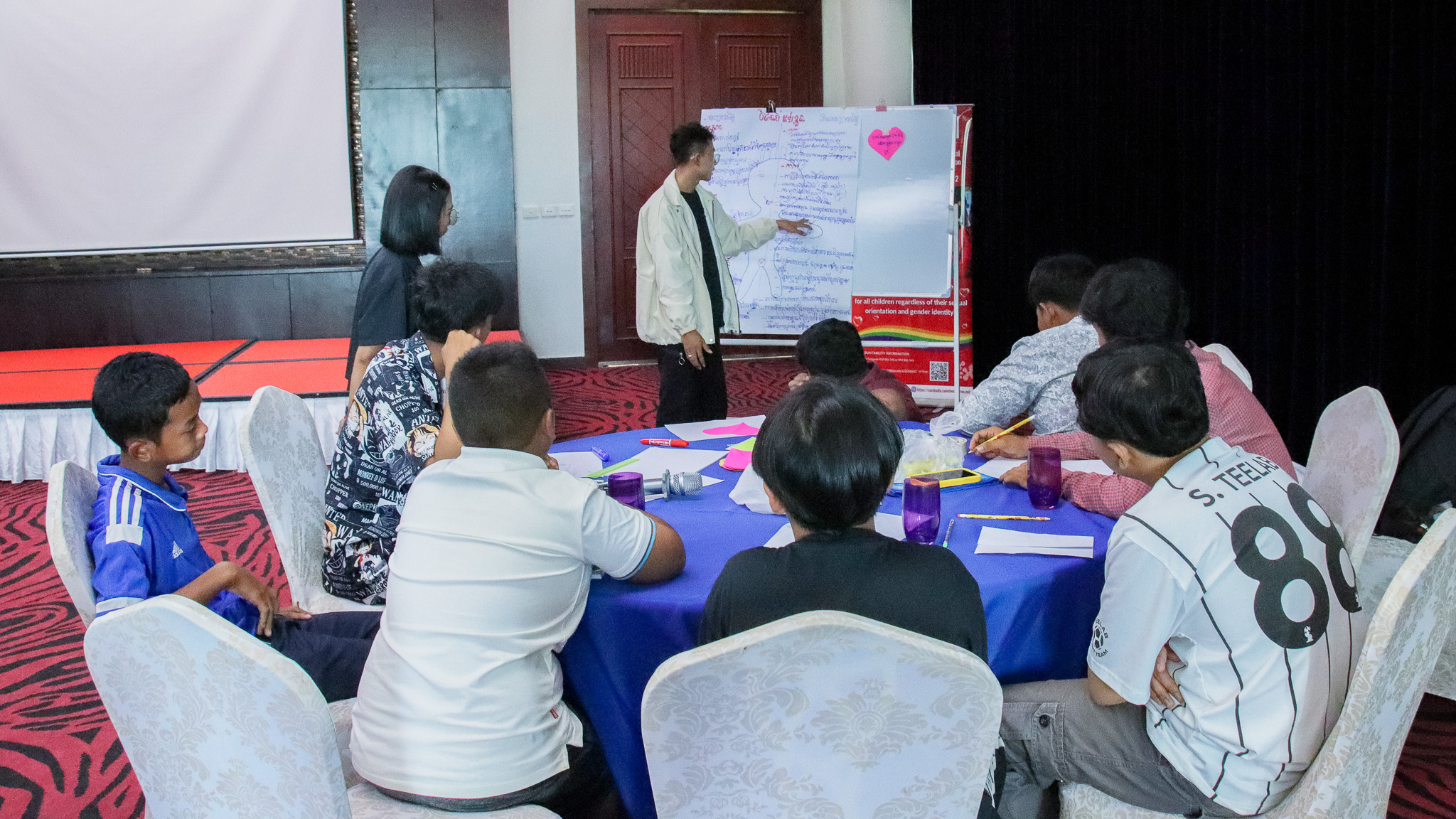
In addition to their advocacy efforts, Meun participated in workshops with national partners, including government officials, teachers, and youth leaders. These sessions were crucial for their understanding of how to promote SOGIESC education in schools and engage with local authorities effectively.
As Meun began becoming more vocal about their gender identity, the initial reactions from the villagers were mixed. While some continued to express discomfort or disapproval, there were notable moments of positive change. A few villagers, particularly those who had previously been silent, began to express understanding after hearing Meun's personal story and the challenges they had faced. This shift was most evident during community discussions organized by Meun, where open dialogue helped foster empathy. Slowly, others began to speak out against the bullying, and a small but growing group of villagers started to support Meun, recognizing the importance of acceptance and respect for all individuals, regardless of their gender identity.
As they grew more confident, Meun took on a mentorship role, guiding younger children in their community through the challenges related to their gender identity or expression.
“I always share everything I learn with the children in my club, those in my community, my schoolmates, friends, family, and others around me,” Meun said. “My family frequently praises my involvement in various activities, whether it be attending workshops or participating in community events. They admire my confidence, bravery, and strong communication skills.”
Meun's parents, especially their mother, Ms. Sreypich, played a critical role in their journey toward empowerment and even made time to attend the workshops that Meun facilitated.
“My child is very responsible and never causes worry for the family. Meun knows how to manage emotions, stay calm even in difficult situations, and never create problems,” Ms. Sreypich said. “At school, Meun never skipped classes or was lazy. At home, Meun helps with chores and supports the family whenever possible, whether through household tasks or earning income."
The club member, Sreynou, described Meun as a responsible and outspoken leader, emphasizing the importance of standing by children with diverse SOGIESC.
"Children with diverse SOGIESC are just like everyone else. They contribute positively to the community and do no harm. Even if some people do not accept them, I will always stand by them as a friend, without discrimination," she said.
Despite these efforts, Meun believes more must be done to foster inclusivity and understanding by expanding awareness and education on SOGIESC issues.
“I will continue to advocate for more training sessions in schools and communities to combat ignorance and discrimination against children with diverse SOGIESC, ensuring they feel empowered, confident, and able to pursue their education without fear,” they said.